
Healthcare marketing leaders know firsthand how heavily the industry relies on stock imagery. For years, it has been the practical choice: quick, low cost, and consistent across campaigns. But today’s patients are far more visually sophisticated. They can immediately tell when an image feels staged or generic.
Trust isn’t just a brand value in healthcare. It’s a competitive advantage. Patients expect communication that feels transparent and grounded in reality. Original photography and video help you meet those expectations by showing the people, environments, and moments that truly define your organization.
Authentic visuals can enhance the patient experience across every digital touchpoint. The challenge is creating HIPAA-compliant photos and videos. Ahead, we’ll explore why healthcare brands are moving beyond stock imagery and offer suggestions for how to create more authentic visuals while staying compliant with HIPAA requirements and other regulations.
Stock photography has been the norm in healthcare because it solves real operational and compliance challenges. For many marketing teams, it’s a practical way to keep campaigns moving without disrupting clinical workflows or navigating complex approval processes.
The convenience factor has normalized stock usage across the industry. But marketing priorities have evolved. Patients now expect authentic digital experiences that reflect real people and real care settings. Social platforms reward originality and relatability. And in competitive markets, differentiation is essential.
Stock photography may solve workflow problems, but it’s often a hindrance to healthcare branding. Worse, it can erode patient trust. As expectations shift, healthcare brands are rethinking how they show up visually. Ahead, we’ll look at making the transition from stock images to more realistic, patient-focused images.

Patients start forming opinions about your healthcare brand long before they schedule an appointment, call your office, or meet a provider. Visual content often creates that first impression. Within seconds of visiting your website, viewing a social post, or seeing an advertisement, people make assumptions about your organization’s credibility, professionalism, and patient experience.
Today’s patients evaluate healthcare brands visually. They look for signs of trustworthiness, reassurance, and authenticity. They want to see realistic environments and real experiences, and they want to see themselves represented.
Here are some things to keep in mind when building your visual marketing strategy:
For healthcare marketers, the takeaway is simple: visuals shape perception long before a patient enters an exam room. The images you choose can either strengthen trust and connection or create barriers that may be challenging to overcome.
For many medical marketing teams, compliance concerns are the biggest challenge to producing original content. It’s more than managing a creative process. You’re navigating one of the most tightly regulated privacy environments in any industry.
An image or video can qualify as Protected Health Information (PHI) if it reveals a patient’s identity or relates to their care, which means every decision around healthcare photography carries legal and operational weight.
This is why so many organizations default to stock imagery. It feels safer, faster, and easier than managing consent, coordinating with compliance teams, or ensuring no identifiable information appears in the background of a shot.
But with the right processes in place, you can create authentic, compelling visuals without compromising patient privacy. Here are some key considerations and best practices to help your brand safely produce original content:
With thoughtful planning and the right safeguards, you can create meaningful, human‑centered visuals that reflect real care experiences while protecting patient privacy at every step.

With the right privacy safeguards in place, real patient photography can be a powerful asset in your healthcare advertising toolkit. Authentic images help patients connect with your organization on a human level and create a more accurate representation of the care experience.
Unlike stock photography, original content showcases the people, environments, and moments that make your healthcare brand unique. Real photos can help you:
When patients can see themselves reflected in your content, your message becomes more salient and memorable. Healthcare organizations are already seeing stronger engagement from authentic, community-driven creative strategies.
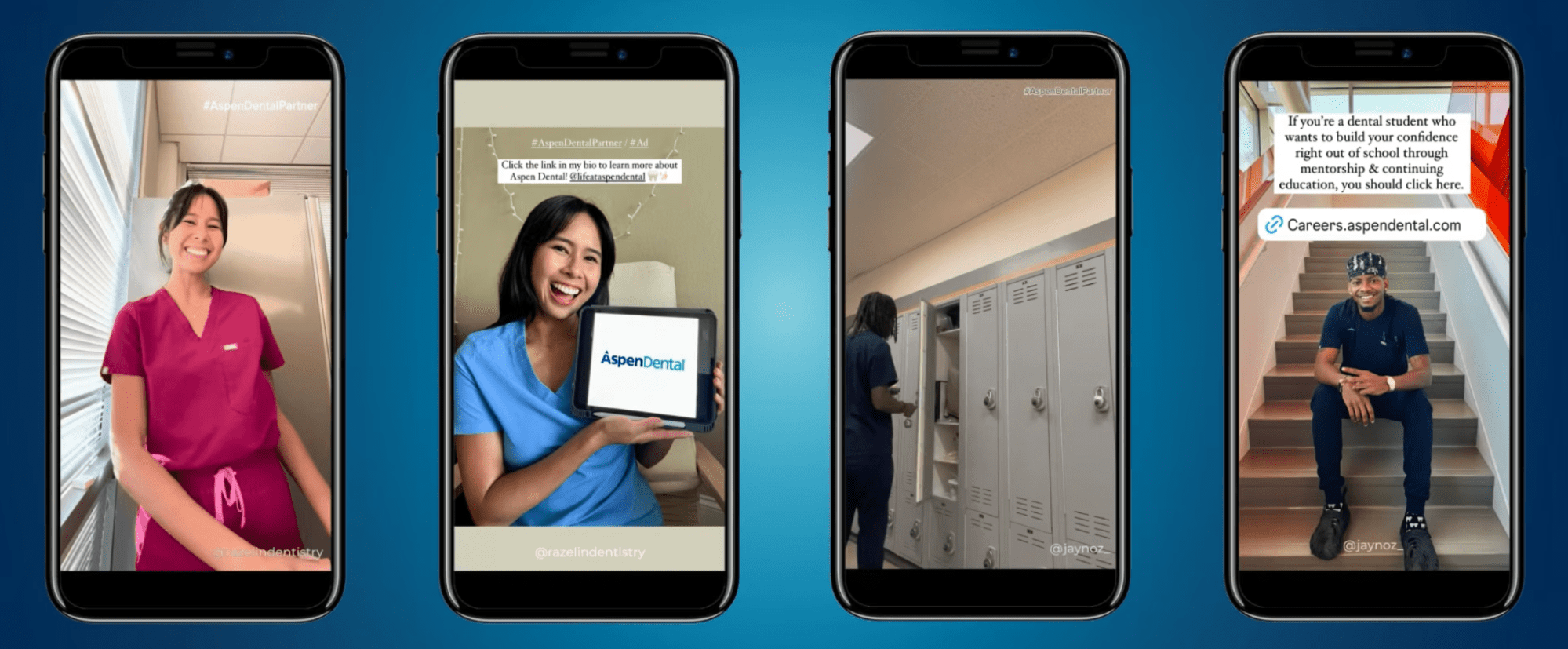
To support recruitment and brand awareness efforts, Aspen Dental partnered with Socialfly on a creator-driven campaign featuring dental students with authentic, established Instagram audiences. Rather than relying on overly polished or generic creative, the campaign focused on community-driven content designed to feel relatable and credible to future dental professionals.
The campaign generated:
The results demonstrated how authentic, human-centered content can outperform traditional branded creative by creating stronger audience connection and engagement. Healthcare brands can build that same sense of authenticity through provider content, behind-the-scenes storytelling, educational media, and other community-driven creative strategies.
Authenticity in healthcare marketing doesn’t require photographing patients in every campaign. In fact, many healthcare organizations build trust and create meaningful connections without relying heavily on patient-focused photography at all.
By showcasing the people, environments, and experiences that define your organization, you can create content that feels genuine while reducing many of the privacy and compliance challenges associated with patient imagery.
The goal is to help audiences see the real people behind the care. These content formats often feel more relatable because they reflect everyday experiences rather than staged marketing scenarios.
If patient photos are off limits for your organization, you can achieve similar results with:
Authenticity comes from showing real expertise and real experiences. By diversifying your content strategy, your healthcare brand can build trust and create a more human digital presence without depending exclusively on stock or patient portraits.

Healthcare organizations investing in authentic creative strategies are better positioned to build patient trust and strengthen digital performance across social, web, and paid media. When your visuals feel real and relatable, patients connect more deeply with your message—and that connection drives measurable results.
Socialfly can help you create powerful, human‑centered creative assets that elevate your brand and support long‑term growth. If you’re ready to move beyond generic visuals and build a stronger digital presence, partner with Socialfly to bring authenticity to every touchpoint.
Explore our case studies to see how we’ve helped brands succeed on social, then get in touch to start building a winning medical photography and video strategy.
